Site Environment
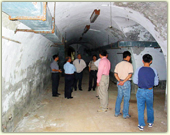
Establishing a national gravity reference station inside the Shibajianshan tunnel was no spontaneous gamble. The European Center for Geodynamics and Seismology in Luxembourg (http://www.ecgs.lu/) was originally an abandoned mine tunnel, later refurbished into an underground laboratory hosting a superconducting gravimeter—an experience that inspired the choice of Shibajianshan in Hsinchu.
During World War II, Shibajianshan was a restricted area garrisoned by Japanese troops as a command post and military supply depot. After the war, during Taiwan's martial-law period, the area was used briefly by manoeuvring units. Subsequently it passed through the military, the Hsinchu Regional Command and back to the military; despite repeated renovation attempts the tunnel had largely been left dormant—until it became the home of Taiwan's first national gravity reference station.
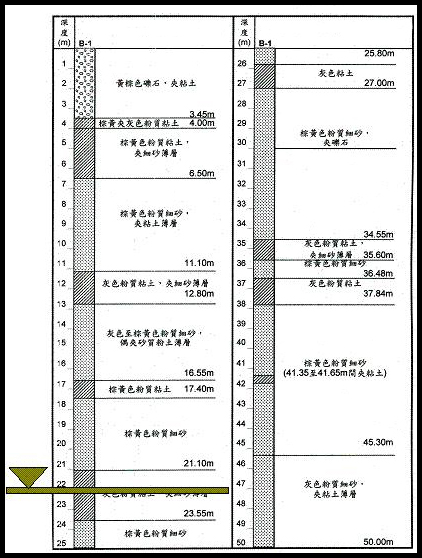
Beyond high-precision instruments, the geographic setting of a gravity reference station is just as important. The Shibajianshan tunnel offers thick overburden, stable temperatures, structural integrity, stable soil, a low water table, no flowing groundwater and easy access—all of which make it an ideal site.
Despite these advantages, MOI proceeded cautiously. In 2003, Japanese expert Dr. Tadahiro Sato was invited to inspect the site; in 2004, German expert Dr. Jürgen Neumeyer followed. After favourable evaluations by multiple international specialists, the Shibajianshan tunnel was officially selected.